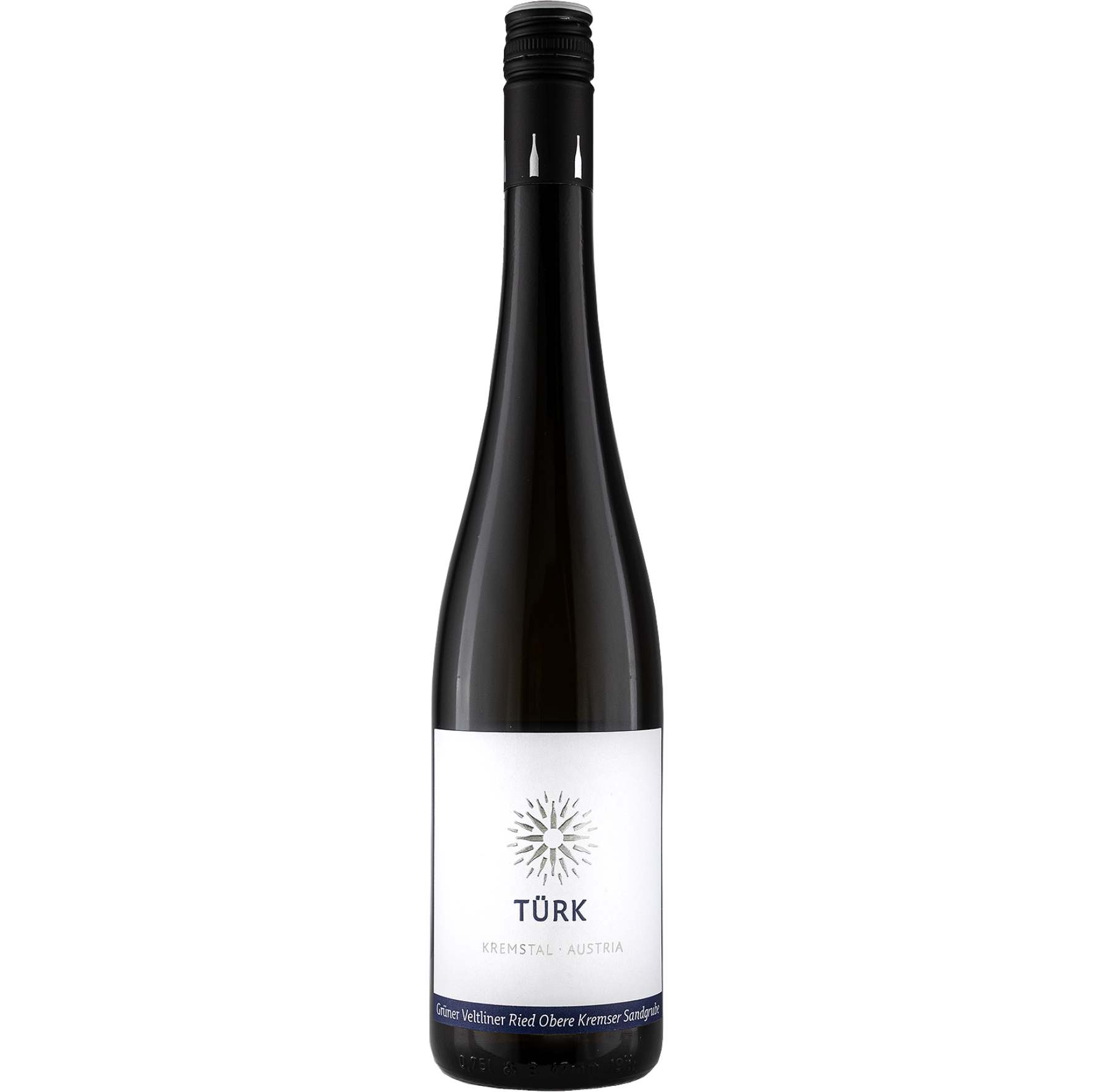
Grüner Veltliner from the Obere Kremser Sandgrube: the original Sandgrube, first documented in 1214. Loess more than twenty metres deep, vines from 1965. Grapefruit and lime, the bright spice of white pepper, turning juicier and more mineral with air.
The nose is fruit-driven, with grapefruit and lime to the fore. With air the wine opens into juicier, mineral tones, tropical fruit sitting behind them. The palate is dry and taut, with a fresh acidity that carries the citrus and the bright spice of white pepper running through it. A mineral underlay gives direction; the finish is clean and long. The estate credits it with longevity and very good cellaring potential. Pour it with asparagus and ham, pan-fried cod, a salad of fennel and citrus or a sharp Austrian mountain cheese.
Weingut Türk lies in Stratzing, just above Krems. Franz Türk makes the wines there with his son Alexander, across seventeen hectares that are more than three quarters Grüner Veltliner. The estate was the first in the world to design a Bodenetikett: a label whose colour code states the soil the wine grew on.
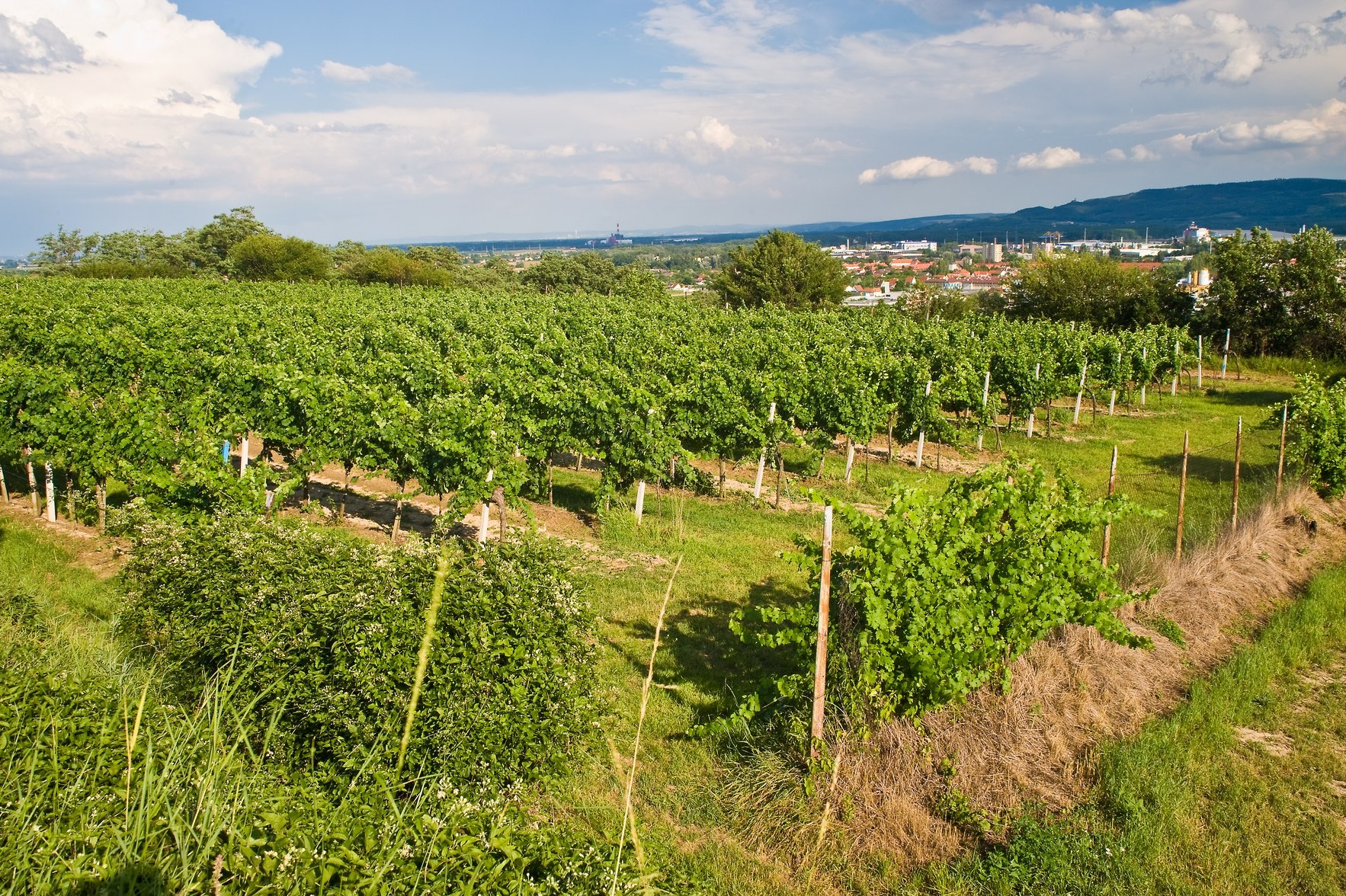
Here that soil belongs to the Obere Kremser Sandgrube, also known as the Original Kremser Sandgrube. The vineyard sits at 246 metres, tilts gently due south and was first recorded in 1214. The vines date from 1965.
The soil is loess, more than twenty metres thick — the same formation that carries the Frechau next door. When the wines of this plot became scarce and sought after in the 1950s, the name Kremser Sandgrube was extended to a far larger area beside it. This wine comes from the original.
 Exclusive wines from around the world